August 18, 2026
Block play is one of the most deceptively powerful activities available to young children, quietly building the intellectual foundation that formal STEM education will later build upon in school. When a child stacks blocks into a tower or arranges them into a bridge, they are not simply playing — they are reasoning, experimenting, and problem-solving in real time without any prompting from an adult. For Scottsdale families wondering how early learning experiences shape their child's future abilities, the answer often lives in the block corner of a well-designed classroom. This blog explores exactly how block play introduces preschoolers to science, technology, engineering, and math in ways that feel entirely natural and joyful to a young child.
Understanding Why Block Play Is a Gateway to Scientific Thinking
Science begins with observation and curiosity, two qualities that young children demonstrate naturally when they are given open-ended materials and the freedom to explore them without a predetermined outcome in mind. When a child at a local preschool repeatedly stacks blocks until the tower falls, they are conducting an informal experiment and gathering data about balance, gravity, and structural stability through direct physical experience. Each collapse of a tower teaches a child something about the relationship between height and weight distribution that no worksheet or flashcard could communicate as effectively or as memorably as the experience itself. A preschool environment that embraces STREAM curriculum — which integrates science, technology, reading, engineering, arts, and math — creates the conditions in which these informal experiments become intentional and celebrated parts of the learning day.
Discovering How Block Play Builds Core Engineering Skills
Engineering is fundamentally about designing solutions to problems, and children who spend time building with blocks are practicing exactly this skill long before they encounter formal engineering concepts in elementary or middle school. At a quality local preschool, educators observe children planning their structures, testing their ideas, making adjustments when something does not work, and celebrating when their design finally achieves the result they imagined from the beginning. This iterative design process — plan, build, test, revise — mirrors the engineering design cycle used by professional engineers to solve complex real-world problems, and young children move through it naturally and repeatedly during free play with blocks. Supporting this kind of constructive play with intentional teacher guidance and vocabulary helps children make conscious connections between what they are doing with their hands and the engineering thinking they are developing in their minds.
Exploring the Mathematical Concepts Hidden Inside Every Block Structure
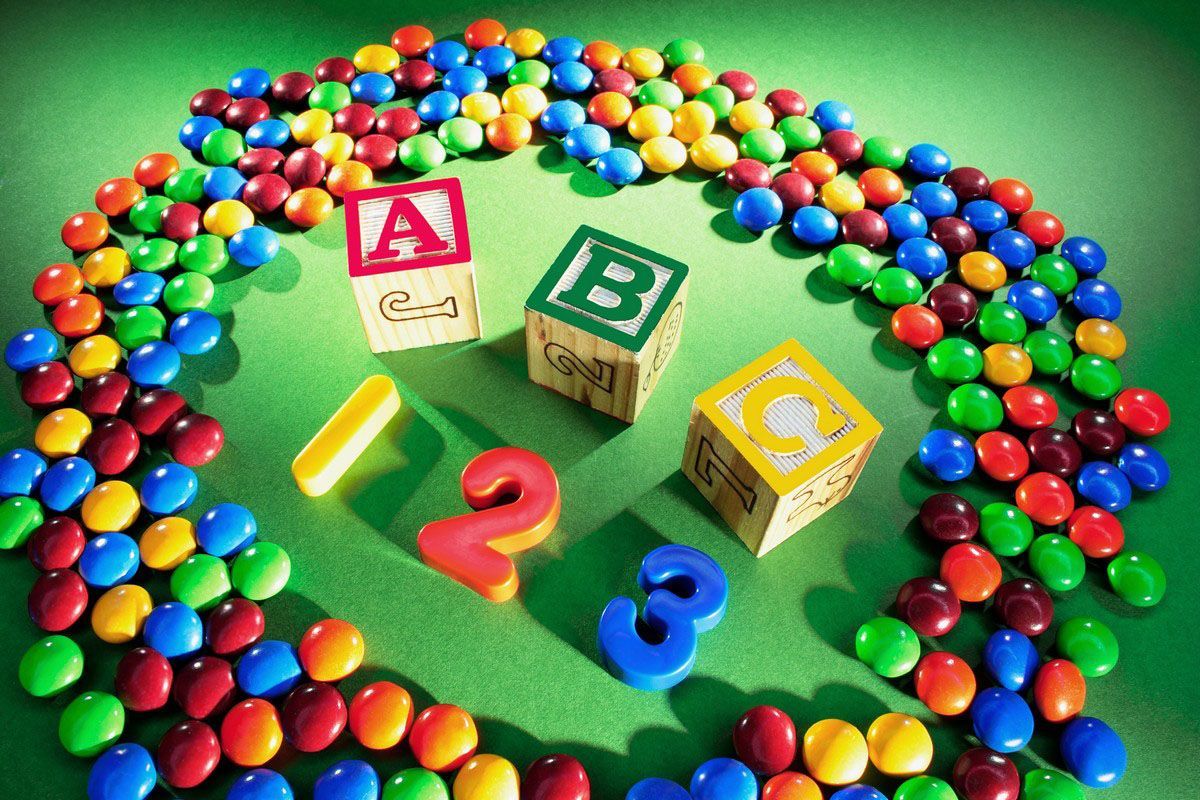
Every block session is a mathematics lesson in disguise, covering concepts that include counting, measurement, spatial reasoning, symmetry, fractions, and geometric shapes without ever requiring a child to sit still and complete a formal math problem. A child building with blocks at a local preschool intuitively notices that two small square blocks equal one rectangular block in length, discovering the concept of fractions through physical manipulation long before the vocabulary or symbolic notation for that concept is introduced in a classroom setting. Sorting blocks by shape, arranging them in patterns, and comparing the height of two towers all reinforce early number sense and logical thinking in ways that are deeply engaging and immediately meaningful to a young child's developing mathematical mind. The individualized curriculum approach at a play-based preschool gives educators the flexibility to extend these mathematical moments with purposeful questions and vocabulary that help each child build on exactly what they are already discovering through their own exploration.
Recognizing the Role of Technology in Modern Block Play Environments
Technology in early childhood does not require screens or devices — it includes any tool or system that a child uses to accomplish a task, which means that blocks themselves are a form of technology when children use them intentionally to achieve a specific structural or creative goal. A local preschool that thoughtfully integrates STREAM learning understands that technology awareness begins when children learn to select the right block for a specific purpose, understand the properties of different shapes, and recognize that the tools available to them can either support or limit what they are trying to build. Educators who narrate these moments of tool selection and intentional material use are building the foundational technological literacy that will help children engage thoughtfully with more complex tools and systems as they advance through school and into their professional lives. This approach to technology through hands-on play is entirely consistent with the philosophy that learning happens most powerfully when children are active, engaged, and pursuing something they genuinely care about achieving on their own terms.
Understanding What Block Play Reveals About a Child's Developmental Readiness
According to Today's Parent, some children enter preschool as early as two and a half and as old as four, with readiness depending on individual development rather than age alone, which means that block play serves as a valuable window into where each child is developmentally at the time they arrive at school. The way a child approaches block play — whether they prefer to knock towers down, build simple stacks, create elaborate symmetrical structures, or narrate imaginative stories through their constructions — tells an observant educator a great deal about that child's cognitive, social, and physical development in a single activity session. A local preschool that uses child-led assessments and individualized curriculum planning can use block play observations to tailor instruction to each child's current level of readiness without applying the kind of standardized pressure that research consistently shows is counterproductive for young learners. Teachers who understand how to read and respond to what they observe during block play are able to offer precisely the right amount of support, challenge, and encouragement to help each child take their next developmental step forward with confidence.
Seeing How Block Play Supports Social and Collaborative Learning
STEM skills do not develop in isolation, and the social dimension of block play at a local preschool is just as important as the intellectual dimension because collaboration, negotiation, and shared problem-solving are essential competencies for any future engineer, scientist, or innovator. When two children decide to build a structure together, they must communicate their ideas, listen to each other's suggestions, manage disagreements about design decisions, and coordinate their physical actions to achieve a shared result — a process that develops communication and collaboration skills alongside the STEM thinking that the activity itself promotes. Pre-kindergarten children who regularly engage in collaborative block play develop the kind of flexible thinking and cooperative problem-solving that kindergarten teachers consistently identify as among the strongest predictors of academic and social success in the early elementary years. A preschool that intentionally creates time and space for both independent and collaborative block play is giving children the full spectrum of STEM learning experiences they need to arrive at kindergarten truly prepared for the challenges ahead.
Connecting Block Play to the Full STREAM Curriculum Approach
Block play does not exist in isolation from the other elements of a rich early childhood curriculum — it connects naturally to reading through storytelling about structures, to arts through aesthetic design choices, to meditation and mindfulness through the focused and calming concentration that sustained building requires of young children. A local preschool that incorporates STREAM curriculum, play-based learning, yoga, and meditation into its daily programming creates a learning environment in which block play becomes one rich thread in a much larger tapestry of integrated early childhood experiences designed to develop the whole child. The individualized nature of a child-centered approach means that educators can use what they observe during block play to make meaningful connections to literacy concepts, mathematical language, scientific vocabulary, and social-emotional learning in ways that honor each child's unique learning style and pace. Parents who choose a preschool built on this kind of holistic, integrated philosophy are investing in something far more meaningful than academic preparation alone — they are giving their children the joy of learning as a deeply personal and intrinsically motivating experience from the very beginning.
Block play is far more than a classroom activity — it is a carefully observed window into how young children think, reason, collaborate, and grow as future engineers, scientists, and creative problem-solvers. Developing Minds Academy Preschool has proudly served Scottsdale, Mesa, Tempe, and the surrounding Arizona communities as a family-owned, woman-owned early childhood program built on play-based learning, STREAM curriculum, individualized instruction, and over 60 years of combined teaching experience. For more information, contact us today!